A Spring Time Adventure in Ireland with St. Patrick's in Killarney.
With Fishing Villages, Seaside Drives, Afternoon Tea, Cosy Pubs, Gardens, Castles, Abbeys, Cathedrals, Stone Circles, Portal Tombs and Dolmens and Megalithic Cemeteries.
March 11th - 27th, 2027
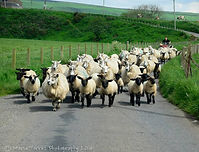


Some of our favourite days in life have been spent exploring fishing villages, hidden coves and beaches and listening to the waves lap against the shore. There are many coastal villages, coastlines and seascapes that we love exploring, and we also have many favourite places to eat fish and chips, have afternoon tea and enjoy great pub grub, so we decided to combine them into a wonderful coastal adventure! There are so many amazing places to see and visit in Ireland, but we wanted this tour to be all about the water. The Irish Sea, the Celtic Sea, the Wild Atlantic and all of the smaller bodies of water to include Loughs, Rivers, Bays, Springs and Inlets. Yes, take us to the water, let us play in the sea and we will be happy!
Highlights include: Greystones, Enniscorthy Castle, Kilkenny and Kilkenny Castle, Jerpoint Abbey, Waterford City, Waterford Crystal Factory, Kilfarrasy Beach, Bunmahon Viewpoint and Bunmahon Beach, Copper Coast, Cobh and Cobh Titanic Walking Tour, Queenstown Titanic Experience, Kinsale, and Kinsale Harbour, Charles Fort, The Meadery, Desmond Castle and Wine Museum, Drombeg Stone Circle, Uragh Stone Circle, Ring of Kerry, Dingle Peninsula, the Burren, Poulnabrone Dolmen, Caherconnell Fort, the Cliffs of Moher, Galway and Galway Bay, Sligo, Carrowmore Megalithic Cemetery, Knocknarea, Kells Monastic Site, the Hill of Tara and More!
Price includes a full Irish breakfast each morning and all meals as indicated in itinerary. 17 nights in 4 or 5 Star Irish Tourist Board rated accommodations. We try to show you as many different kinds of accommodations as possible so you may stay in manor house, a farmhouse, an old coaching inn and a small hotel all on the same visit! Itinerary also includes guided minibus tour with luggage handling, all sightseeing including any entrance fees, tour guide for all venues, all taxes and service charges.
$10,795US per person. Guaranteed departure. 1 Single Available.
$1695 Single Supplement.
$1000 per person deposit to reserve.
Please do not sign up for a tour until you have thoroughly
read through our terms and conditions as you must agree
to these to join a tour!
A Magical Journey through the Villages and Small Towns of Germany
with amazing castles, wonderful wine experiences and thrilling history.
May 1st - 17th, 2027
We can't get enough of Germany! 17 days of traveling through some of our favourite places in Germany. Our journey will take us through the small towns, villages and countryside in the German States of Anhalt, Niedersachsenn-Lower Saxony, Hessen, Rheinland-Pfatz, Baden-Württemberg, Bavaria, Thüringen and Saxony. My great grandmother Eva Louisa Cecelia Schmallenberger came from Schmallenberg Germany in the North Rhine-Westphalia State. It was not until I was grown and traveling the World that I realized how many traditions and customs she brought to the McDonald family, so I am especially pleased to be offering this tour of her homeland! We will try some of the local dishes that will include: Brot and Brötchen(bread and small crusty rolls) as bread is such a main staple of the German diet. Käsespätzle which is similar to macaroni and cheese but with much more flavour. Currywurst which is a plate of chopped up sausages, chips and a spicy ketchup sauce. Kartoffelpuffer and Bratkartoffeln which are fried potato dishes often served at breakfast. Schnitzel. Eintopf, a one-pot stew that may include a wide variety of ingredients that typically include broth, vegetables, potatoes, and meat. Sauerbraten, a German pot roast. And Schwarzwälder Kirschtorte, also known as a Black Forest Gateaux.
The highlight of this trip will be 3 nights spent in a 1000 year old Castle Burghotel Auf Schönburg in Oberwesel, in a
wonderful location amidst vineyards high above the River Rhine. Burghotel Auf Schönburg
This tour includes 17 nights of castle, luxury hotel, small family hotel, guesthouse and boutique accommodation. We try to showcase as many different types of accommodation as possible on each tour. It also includes all dinners, lunches and breakfasts as listed in the itinerary, all activities, sightseeing and entrance fees as listed in itinerary, all taxes, fees and service charges. Guided minibus travel with luggage handling.
Please do not sign up for a tour until you have read through our Terms and Conditions.
Especially in regards to mobility, luggage limits etc.
$11,495 per person. Only 1 Double and 1 Single.
$1795 Single Supplement.
$1000 deposit to book your spot.


Day 1 - May 1st - We will meet at our Berlin Airport accommodation this morning and after a brief orientation we start our journey west. Our first stop will be Burg Bei Magdaburg, known as the “City of Towers.” There are more medieval spires, turrets, gables and lookout points here than nearly any other place in Germany. With its picturesque old town, medieval castle ruins, and beautiful countryside makes it a very charming and picturesque visit. One of the most notable attractions is the Burg Castle, a well-preserved medieval castle that dates back to the 12th century. You can explore the castle grounds, which offer panoramic views of the surrounding countryside. Another popular attraction is the Stadtmauer, a medieval city wall that encircles the old town. You can find some lunch here before we move on to Quedlinburg, the first capitol of Germany with over 1200 years of history. It would be hard to find a more charming town than Quedlinburg! The narrow, cobblestone streets are lined with over 1300 half-timbered houses. Fortunately, the town survived the war undamaged, so the entire town was named a UNESCO World Heritage site. The town is built around a large square (Markt) and perches on two hills with the river Bode running through the middle. On one hill is a castle and abbey complex called the Burgberg, and on the other hill is the Muenzenberg. The town square is lined with great examples of medieval and Renaissance buildings. Then we get settled into our accommodation just a short ways away before our Welcoming Dinner. Dinner and Overnight Hildesheim. (B,D)
Day 2 - May 2nd - This morning we make our way to Hamelin, a beautifully restored historical town with magnificent timber-framed and sandstone buildings, many of which date back to the Renaissance period. Osterstrasse and the Pferdemarkt square form the Tokenistic Centre. Between these two points, tiny, winding alleyways are dotted with cafés and inns, cosy beer gardens and pretty little shops. You can follow the rat trail: The cobbles in Hamelin are painted with these little animals, who point the way to the main attractions in the town. This is, of course, associated with the legend of the Pied Piper. As the story goes, a rat catcher was called to the town in 1294 but was subsequently cheated of his fee. In revenge, he lured the children from the town by playing beguiling melodies on his flute – and they were never seen again. Then we make our way to Hanover where we will have lunch before taking a Guided Walk of the city. Discover Hanover's city center and Old Town where you will see historic, half-timbered buildings dating to the medieval era, learn about the city's rich history, and see the Market Church. As we walk, stroll through time, from damage caused by WWII to medieval half-timbered buildings. Then we head to the Leineschloss, a historic palace that now houses the Parliament of Lower Saxony. As we continue through the Old Town, we are searching for picturesque hidden corners with quaint pubs, medieval houses, and small cafés before we stop to admire the new town hall before heading to see the Hannover Opera Theater before finishing our tour. Then back to Hildesheim where you will have the rest of the afternoon and evening free. There are numerous churches, two of them with UNESCO World Heritage status, beautiful half-timbered houses, a 1000-year-old rosebush and many quiet, green corners to relax. Everywhere there are small, lovingly run restaurants and cafés where you can experience idyll and pleasure in equal measure. Overnight Hildesheim. (B,L)
Day 3 - May 3rd - This morning we visit Wolfenbüttel, a historical town filled with half-timbered houses. It is one of the best preserved historical towns in the northern half of Germany. As the first planned Renaissance town, Wolfenbüttel became the residence of the Royal House of Hanover for more than three centuries. Left largely unscathed by the wars throughout history and preserved by the locals with love and understanding, Wolfenbüttel’s Old Town still harks back to the times of holding court with its over 600 half-timbered houses. It is also where the world-famous Jägermeister herb liqueur was invented. Our next stop is the town of Wernigerode, with its historic town centre and lavishly restored and colourful half-timbered houses it is nestled on the northern edge of the Harz Mountains. The epithet "Colourful Town of the Harz Mountains" was coined by the German writer Hermann Löns at the end of the 19th century. The town hall on the market square, the crooked house, the smallest house and the oldest house are just some of these features that make up Wernigerode's rich half-timbered idyll. Also worth seeing are the remains of the town fortifications, the Krummel'sche House, the front of which is completely covered with a carved wooden façade, and of course Wernigerode Castle, which towers majestically over the town and provides visitors with interesting information about the 800-year history of the counts and princes of Wernigerode in living rooms, some of which were originally furnished by the German aristocracy. Our last stop of the day is Goslar, a 1,000-year-old town nestled in glorious natural surroundings on the slopes of the Harz mountains. The Old Town of Goslar was declared a UNESCO World Heritage Site due to its 1,500 exceptionally well-preserved half-timbered houses from different eras, located in the centre of the Old Town within the earlier town wall. The history of the town, which gained its wealth from mining and became the seat of the German Emperor, can be experienced at every turn, just by wandering through the narrow cobbled lanes. Dinner and Overnight Hildesheim. (B,D)
Day 4 - May 4th - This morning we journey south to eventually wind up in Siegen, but we will explore Hannoversch Münden first. Nestled between three forests and three rivers in the middle of one of the oldest nature parks in Germany lies the half-timbered, three-river city of Hann. Münden. Here these two rivers unite to form the Weser and mark the beginning of the Weserbergland. As a trading town on three rivers almost completely surrounded by water, water played an important role in the life of the city in the past, but also to this day. Our next stop is Melsungen, a romantic old town where over 400 lovingly restored half-timbered houses form a harmonious ensemble. The symbolic figure of Melsung welcomes you warmly, shows you the sights and takes you on a journey back in time to the Middle Ages. At that time there were many woodcutters in Melsungen who went into the forest in the morning with their axes called “beards”. On the way they sharpened their axes in the soft sandstone of the Fulda Bridge, which is therefore now called the Bartenwetzer Bridge. A stroll around town takes you past the pretty half-timbered town hall , where the symbolic figure of the Bartenwetzer appears on one of the towers every day at 12 p.m. and 6 p.m. We make one last stop for the day at Marburg, with a history stretching back over 800 years. The University is the oldest protestant university in the world, founded in 1527. It boasts in its alumni Emil von Behring, the first ever winner of the Nobel Prize for Medicine. Brothers Jacob and Wilhelm Grimm, who collected many of their fairytales from around the region, also studied here, making the city a popular stop on the German Fairy Tale Road. A fairy tale trail through the city will lead you through its cobbled streets to all sorts of historical sights and quirky works of art. We then get checked into our accommodation in Staufenberg before dinner. Dinner and Overnight Staufenberg. (B,L,D)
Day 5 - May 5th - Today we stay mainly within the district of Siegen-Wittgenstein in Nordrhein-Westfalen. Our first stop of the day is Bad Laasphe with its clear streams, rivers, luscious meadows, lowland mountains and gentle hills, it has no end of beautiful scenery to offer. Look forward to a wonderful view over the picturesque half-timbered old town with its 13th century church and Schloss Wittgenstein Palace. We will take a relaxing stroll through the old town and visit all the shops. We then make our way to the capitol of the district, Seigen which is one of the smaller university towns of Germany. We will find some lunch here and then explore the majestic Lower Castle and surrounding half-timbered houses provide an idyllic backdrop that draw the gazes of visitors as they wander along the Schlossplatz. The Upper Castle provides a wonderful view of the entire city from the expansive park grounds. The castle features the collections of the Siegerland Museum and the Rubens Hall. Siegen is the birthplace of the world-famous Baroque painter Peter Paul Rubens. Consequently, Siegen is often nicknamed the “Rubens City”. Nine original paintings by Rubens are on display in the Rubens Hall. The final stop of the day is in Freudenberg, known above all for its unique, almost closed half-timbered ensemble. In the old town centre, which is also called “Alter Flecken”, more than 80 black-and-white half-timbered houses are still lined up close together and thus form an impressive backdrop. After the city burned down for the second time in the 17th century and the citizens rebuilt their houses, they were all built gable to the streets. The resulting characteristic appearance is now a perfect postcard motif. Dinner and Overnight Stafenberg. (B,L)
Day 6 - May 6th - This morning we are off to the Moselle River Region where we will explore some lovely villages. Our first stop is the village of Klotten, a charming, historic winemaking village set along the scenic Moselle River. It is not only famous for wine but also for the famous slate that was loaded onto barges and shipped all over the world. The village is full of narrow streets, steps and passageways that lead past stone buildings and half-timbered houses, many of which date from the 16th century. The ruins of the medieval Coraidelstein castle preside over the village. Our next stop is the village of Cochem, sitting in a picturesque position in the Moselle River valley close to the borders with Luxembourg and France. This small town of around 5,000 inhabitants has been an important Rhineland wine trading centre since the days that the Romans introduced the vines to the area. The town's most distinctive feature is its castle perched high above the river, with remnants dating back to the 11th century. Underneath lies the old walled city with its narrow cobblestone lanes lined by half-timbered houses with painted decorative fronts. We will settle in for a Wine Tasting Lunch before we make our way further along the river to the village of Beilstein. Often referred to as the 'Sleeping Beauty of the Moselle,' this tiny, historic wine village features narrow cobblestone alleys, the 12th-century castle ruin of Metternich, and classic half-timbered houses that is characteristic of the Moselle Region. We then make our way to Trier where we get settled into our accommodation before we gather for dinner. Dinner and Overnight Trier. (B,D)
Day 7 - May 7th - Today will be spent on your own in Trier. Founded in 16 BC during the reign of Roman Emperor Augustus, Trier is Germany's oldest city and an important site for ancient art treasures and monuments, such as the Porta Nigra, the best-preserved city gate from the ancient world. It is also the birthplace of Karl Marx and known as 'the second Rome' with various UNESCO World Heritage sites located in the city. You can visit the Konstantin-Basilika, the world's largest remaining Roman structure and the oldest German Cathedral, listen to the stories of the birthtown of Karl Marx, visit the Amphitheatre and the famous Imperial Baths where the Romans went to relax. Medieval buildings, such as St. Peter's Cathedral – the oldest church in Germany – and the early-Gothic Church of Our Lady are also deeply impressive. Let the town enchant you, with its charming half-timbered houses and its many vineyards lining the Moselle which all bear witness to Trier's extensive classical heritage. Trier is second to none when it comes to dining. Excellent wines from the Moselle, Saar and Ruwer wine-growing regions play a key role here, while shops, cafés and bistros across the city entice visitors to stroll around or watch the world go by. A diverse mix of music, performing arts and entertainment is on offer in the city's cultural institutions and trendy clubs. Finally, you may want to enjoy a delicious Tarte Flambée for dinner as you reflect on the wonderful day in Trier. Dinner and Overnight Trier. (B)
Day 8 - May 8th -This morning our first visit is Piesport, another small town on a sharp bend in the Mosel river, in the wine district of the same name. Its perilously steep northern bank, with its pure southerly aspect, is the origin of some of Germany's finest Riesling wines.The town's flagship vineyard is Goldtröpfchen (whose name means 'Droplets of Gold'). It is one of two Erste Lage ("premier cru") sites here. The second, Schubertslay, is a tiny parcel within the first. Dramatic view and equally breathtaking wines, Piesport (often seen as "Piesporter" on a label) is one of Germany's great wine towns. We will explore the town first and as we are in one of Germany's great wine towns, we must do some wine tasting! This afternoon we visit Eltz Castle or Burg Eltz is easily one of the most famous Rhineland-Palatinate quintessential romantic fairytale castle, with parts dating as far back as the 9th century. Originally a a Ganerbenburg castle (meaning it was jointly owned by multiple families), today it is still owned by one of these original three families, the Counts of Eltz-Kempenich. They continue to live in part of the castle, while the other two-thirds are open to the public. While there was once a village surrounding Burg Eltz, today it seems to just appear in the middle of the forest. There are eight towers rising 35 metres above the ground while the interior provides visitors the sight of suits of armour, weapons, artefacts and furnishings that have been there for eight centuries. We then make our way to our castle home for the next 3 nights to get settled in before dinner. Dinner and Overnight Schönburg Castle at Oberwesel. (B,D)
Day 9 - May 9th - This morning you will wake up in our dream castle with a spectacular view over the River Rhine. As we are half way through the tour, the day will be entirely at your leisure after you will wake up in our dream castle with a spectacular view over the River Rhine. The Upper Middle Rhine Valley extends 65 kilometers in length from Bingen to Koblenz and has more castles than any other river in the world. Its landscape and riverfront villages have inspired fairy tails, music, poetry, and paintings for centuries. There could not be a more magical place to wake up! The day is yours to enjoy at your leisure in this amazing castle that is lovingly decorated and waiting to be explored. The fireplace room, the prison tower and the library will help you get into a relaxing mood. You can enjoy the beautiful view of the Rhine valley from the terraces or spend some wonderful hours in the cozy castle courtyard. A special treat for our use is the exclusive access to the enchanted castle garden. The garden is full of wonderful views and mysterious places. As the castle sits in the middle of the UNESCO World Heritage Upper Middle Rhine Valley all around there are vineyards, hiking paths through forests and meadows with beautiful. You will have a picnic lunch to have whenever you are hungry and in the afternoon a wine grower from Oberwesel will you up at the castle to take you on a 2 hour sightseeing tour through the town of Oberwesel and the surrounding vineyards with an introduction to the viticulture on the Middle Rhine and a welcome Riesling Sparkling Wine. You will visit the vineyard and wine-cellar and then have a tasting of four typical Riesling wines before you return to Schönburg Castle. Dinner and Overnight Schönburg Castle at Oberwesel. (B,L,D)
Day 10 - May 10th - This morning is spent very close to home here on the beautiful Rhine River. Its landscape and riverfront villages have inspired fairy tails, music, poetry, and paintings for centuries. There could not be a more magical place to wake up! After breakfast we will explore a few of these town including Bacharach. a lovely town is hidden away along the Rhine. Once you walk through one of the Stone archways that lead into town, you are immediately transported back in time. It is absolutely enchanting! So many of the towns and villages along the Rhine River here are written about, but we had never heard of Bacharach even though it is a UNESCO World Heritage Site. It is a medieval village of cobblestone streets and half-timbered houses, most of which were built before the sixteenth century. The name Bacharach came from Bacchus, the god of wine which is fitting, as the town sits in the valley of hills lined with Riesling and served as a major wine trading and shipping station in the Middle Ages. We will also visit Rüdesheim am Rhein, famous for its Riesling wines and Drosselgasse, one of its picturesque streets that dates back to the middle ages. Drosselgasse is cobbled, narrow, and flanked on both sides with stores, shops, and taverns sporting fancy signs, all of which contribute to its medieval charm. In the evening we will gather for dinner on our last night in the castle. Dinner and Overnight Schönburg Castle at Oberwesel. (B,D)
Day 11 - May 11th - This morning as we leave Oberwesel behind we visit the town of Bingen, also situated at the the Romantic Rhine, the gateway to the Unesco World Heritage of the ‘Upper Middle-Rhine Valley’ and in the middle of four winegrowing regions.The town on the river presents itself with an attractive infrastructure, where the legacy of 2000 years of history can be vividly experienced. Come and enjoy the atmosphere, the various festivals, discover the message of Saint Hildegard at the places where she lived and worked and spend some time in a magical setting. While in Bingen we will enjoy delicious Bingen wine during a Romantic Vineyard Tour in a covered wagon. We will be comfortably coached through the beautiful Bingen landscape and experience great views of the vast, green vineyards of the Rhine city. We will taste two first-class wines from Bingen at the "Table of Encounter". A delicious pretzel with homemade cream cheese awaits you during the idyllic ride. Afterwards, you can enjoy fantastic views from the vantage point "Scharlachkopf", accompanied by two more fine wines. Back at the winery, we will be served a hearty vintner's platter with sausage, cheese and fresh bread. Our final stop before reaching our accommodation is Speyer, another one of Germany’s oldest cities, first established by the Romans on the banks of the Rhine River. Speyer means spires in English, which is fitting as it’s a city with quite a number of buildings featuring impressive spires rising into the sky. One of the most recognisable is the tower of Speyer’s Memorial Church, an impressive neo-Gothic construct that reaches a height of 100 metres. The Imperial Cathedral is also one of the most renowned buildings in the city, constructed of red sandstone and dating back to the year 1030. It’s the largest Romanesque building in the whole of Germany and a UNESCO World Heritage Site. Inside the crypt are the tombs of four emperors, three empresses, and four German kings. Dinner and Overnight Baden-Baden. (B,L,D)
Day 12 - May 12th - This morning we will take a walk through Lichtentaler Allee, world-famous gardens that are overwhelming with an abundance of flowers and trees. Anyone who takes a stroll along Lichtentaler Allee will immediately understand why it is regarded as the heart of Baden-Baden. Stretching for around three kilometres, it links the historic old town with Lichtenthal Abbey – nestled amidst magnificent gardens and flanked by the gentle flow of the River Oos. Here, nature, culture and history come together. Mature trees provide shade, flowers enchant the senses, and art and architecture speak of the spirit of bygone eras. Then we take a stroll along the impressive frontage of the Trinkhalle, Baden-Baden's Pump Room, with its Corinthian pillars and striking murals. With its striking size and almost 300 foot long open walkway, the Trinkhalle sits slightly elevated and situated next to the Kurhaus, its majestic appearance with its 16 pillars recalls the Roman history of Baden-Baden. We will return to the hotel for lunch before we enjoy a guided wine tasting at Weingut Maier, a certified organic winery in Baden-Baden, where tradition meets quality and sustainability. In this experience, you'll taste 4 of their finest organic wines—including whites, rosés, and reds—each expressing the uniqueness of the terroir and the commitment to natural winemaking. The tasting is accompanied by small delicacies from the winery's kitchen, carefully prepared to highlight the wines’ aromas and flavors. Dinner on your own this evening. Overnight Baden-Baden. (B,L)
Day 13 - May 13th - This morning we start our journey to Rothenburg ob der Tauber with a first stop in Esslingen, an attractive town full of half-timbered buildings in the commuter region around Stuttgart. It is one of the most beautiful medieval towns in Germany and boasts 1200 years of history and over 800 historical monuments. It is also known as Esslingen am Neckar, adding the river Neckar to the name so as to avoid confusion with another Esslingen further north in Germany. The timber-framed houses and other historic buildings in the medieval town, the city wall and towers and the vineyards around the city are all interesting reasons to explore in Esslingen. We then make our way to Ludwigsburg, Germany’s Baroque gem! You can fins some lunch on your own and visit the grand market square, the tempting arcades and all that this small, friendly city has ot offer in history and culture galore. We then take a tour of Ludwigsburg Palace before stopping for lunch. First-time visitors are amazed by the sheer size with 452 rooms in 18 buildings. This is one of Europe’s largest original Baroque complexes. The lavish architecture, with arches and columns, frescoes and chandeliers, reflects the power and wealth of the dukes and kings, for whom this was home. On our guided tour we will travel back through 300 years. In banqueting halls and state apartments, stories bring the past to life. Imagine the rich and famous sweeping down the imposing staircases. Admire the art in the Baroque Gallery (Barockgalerie) and tour the private apartments to see how the royal family lived. The opulence of the antiques and portraits, gilding and silk damask contrasts with the servant’s quarters, at the bottom of hidden staircases. Dinner and Overnight Rothenberg ob der Tauber. (B,D)
Day 14 - May 14th - Today you will have free in Rothenberg. There are very few places elsewhere in the world with such a wealth of original buildings dating from the Middle Ages as there are here. You will feel as if you have gone back in time as you amble through the Old Town with its secluded squares and tucked-away corners with towers, fountains, gates and wine taverns. You will love the Largest Christmas Shop in Europe, but he main highlight of Rothenberg, is walking around its streets and admiring its stunning architecture. The main streets are Klostergasse, Herrngasse and Schmiedgasse (which turns into Spitalgasse). These three roads radiate out from the towns beautiful Market Square, making it very easy to traverse the whole town. Many people’s favorite part of town is Plönlein and you will instantly recognize it from the multiple picture you will have seen. The town walls, however, are the real highlight as you walk up any one of the several staircases that will immediately transport you back in time to the town’s imperial heyday. The wall covers almost two miles around town, providing many great views. Along the way, you also pass through many of the original guard houses. In the evening you may want to join the Night Watchman Tour, a free tour that will take you on a walk back in time. The meeting point is at the market square in front of the town hall at 8:00pm and lasts about an hour. See you all in the morning. Overnight Rothenberg ob der Tauber. (B)
Day 15 - May 15th - This morning we start our day off with a journey to Bad Wimpfen, at the confluence of the Neckar and Jagst rivers, is one of the most stunning towns of the Neckar Valley. The Romans built a fortress and a bridge here, on the riverbank site of an ancient Celtic settlement, and if you climb the 167 steps to the Blue Tower’s viewing platform, you’ll be rewarded with stunning views of this medieval town. In the 1st century AD the Staufen emperor Barbarossa chose this town as the site of his largest Pfalz (residence). The ruins of this palace still overshadow the town and are well worth a stroll. Upon a stroll around town you will think you stepped into a fairy tale, with towers and spires popping up against the skyline of this ancient town on Germany’s historic castle route. We then make our way to Würzburg, a 1300 year old city steeped in history and culture sitting on the banks of the Main River in northern Bavaria. We will stop for lunch here and then explore this Baroque city offering southern German flair and Franconian hospitality. Architectural masterpieces from various eras shape the cityscape. Even from afar, the two imposing towers of St. Kilian Cathedral – the fourth largest Romanesque church in Germany – point the way to the city. Würzburg's famous landmarks are the Würzburg Residence with its Court Gardens and Residence Square (a UNESCO World Heritage Site), the Marienberg Fortress and the 180-metre-long Old Main Bridge, which is lined with impressive statues of saints. Gracefully straddling the banks of the Main River amid idyllic vineyards, the location alone is reason enough to visit Würzburg. Dinner and Overnight Rothenberg ob der Tauber. (B,L)
Day 16 - May 16th - This morning we start our journey to Munich Airport with a first stop in Nuremberg, not a small town or village, but the centre of this city feels very much like one. The historical center of Nuremberg, Old Town Altstadt) is easily differentiated from other parts of the city. Divided in two by the Pegnitz River, the district represents a complex architectural ensemble with a maze of historical lanes packed with half-timber houses, linked by centuries-old bridges, such as Maxbrücke, and set against the picturesque backdrops of large churches like St. Sebaldus' and St. Lawrence's, as well as medieval sites like the Heilig-Geist-Spital found along the banks. The city is best explored on foot and with a local guide, so we will have a Guided Walking Tour. After our tour you can find some lunch before visiting the university, baroque and episcopal city of Eichstätt, located about an hour south of Nuremberg on the banks of the Altmühl River. It marks the southernmost point of the Castle Road and forms the centre of the Altmühltal Nature Park. It is framed by the Jura plateaus of the Southern Franconian Alb. Known for its elegant Baroque architecture, deep-rooted ecclesiastical heritage, and rich fossil history, this charming town is a hidden gem waiting to be explored. With a blend of scenic beauty, cultural depth, and geological wonder, Eichstätt offers a unique experience for lovers of history, nature, and peaceful rural life. We then get settled into our charming family owned hotel just a few minutes from the airport for our last night together. Farewell Dinner and Overnight near Munich Airport. (B,D)
Day 17 - May 17th - This morning we take you to the Munich International Airport at the time that best suits your journey home.